PenguClash Case Study: 3.5M Pre-Registrations, a First-Month Breakout, and a 3-Month Build by 2 Developers
Let's explore the world of cute penguins
A 2-person developer team built a production-grade competitive multiplayer game in 3 months, launched it on TON and Abstract, and generated 3.5M pre-registrations before a single player touched it. Here is how they did it, and what other developers can learn from it.
The Challenge: Building Competitive Multiplayer Is Expensive and Slow
PenguClash is a tactical 1v1 PvP strategy game native to Telegram and Web. Players command squads of penguins in skill-based mini-matches under 2 minutes — fast, fair, and competitive.
The problem with building that kind of game is infrastructure. A fair competitive multiplayer title needs:
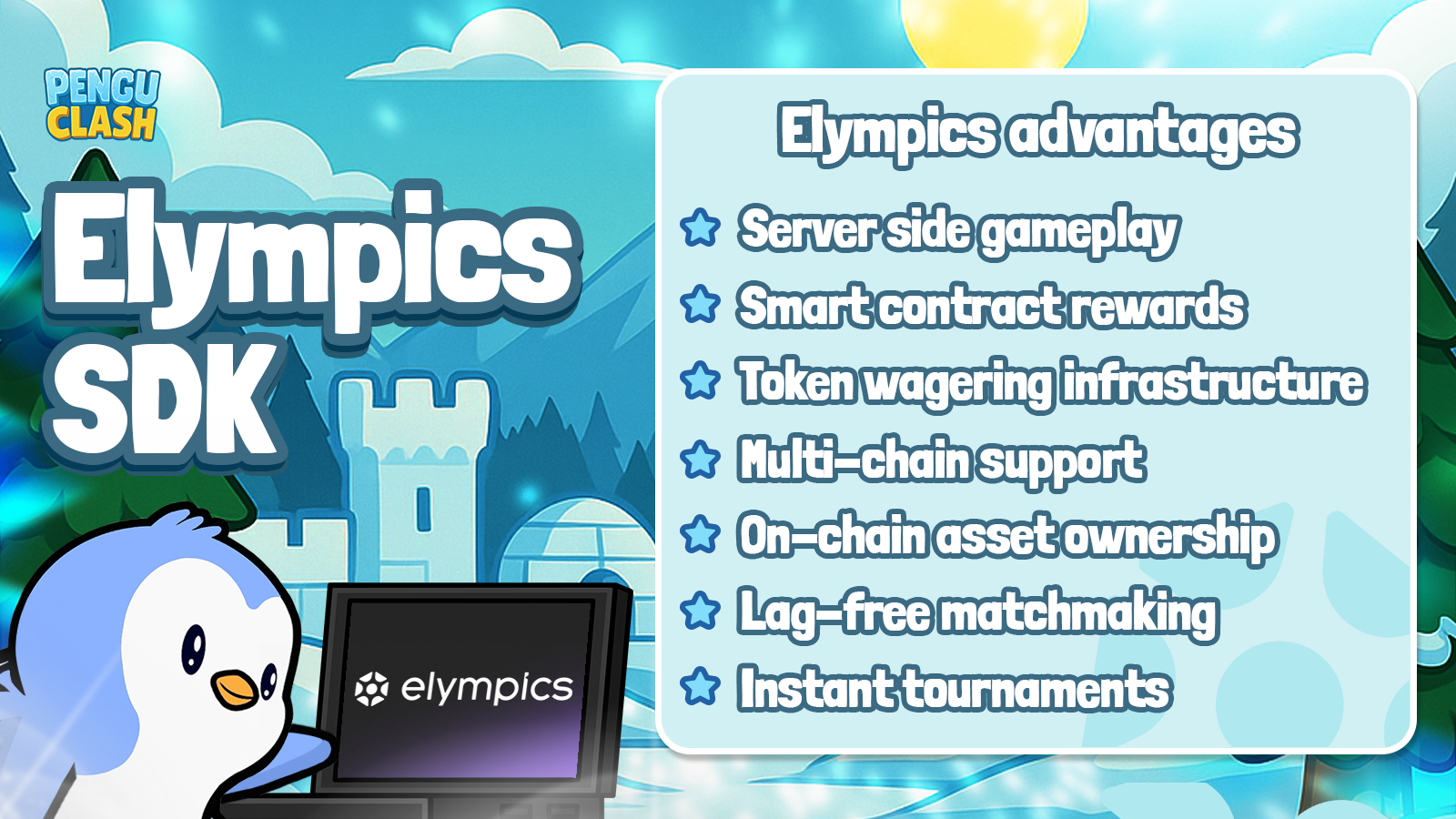
Server-side gameplay execution to prevent cheating
Synchronized, lag-tolerant matchmaking at scale
Wallet integration and wagering mechanics for a Web3 context
Smart contract-based reward distribution
On-chain asset ownership for cosmetics
Building all of that from scratch is a 12-month project for a well-staffed team. For 2 developers, it would have been a dead end.
The Solution: Don't Build the Infrastructure — Integrate It
The PenguClash team chose to build on the Elympics SDK, which ships all of the above as a pre-built backend. Instead of spending months on infrastructure, they spent those months building the game itself.
The result: a 3-month build that launched with a feature set most competitive titles take years to reach.
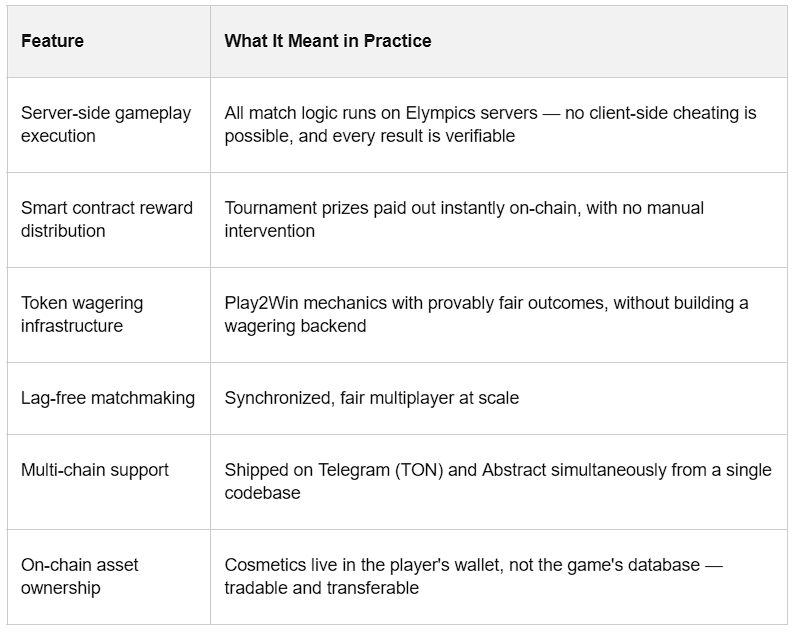
What came out of the box on day one:
This is not just an efficiency story. It is an architecture story. The decision to integrate rather than build meant the team could ship a competitive, wagering-enabled, multi-chain game in the same time another team might spend standing up a matchmaking server.
Pre-Launch: How We Built 3.5M Pre-Registrations in 3 Weeks
The IP Strategy
Before a single player logged in, PenguClash had 3.5M pre-registrations. That number came from one decision: partnering with Pudgy Penguins as the primary user acquisition channel.
Pudgy Penguins is one of the most recognized and community-beloved NFT IPs. The partnership gave PenguClash instant access to a large, passionate, and crypto-native audience — the exact demographic for a skill-based wagering game on Telegram. Trust, brand recognition, and organic community word-of-mouth did the work that a paid campaign alone could not.
The lesson here is not "partner with a famous IP." It is that distribution is a product decision. Choosing Pudgy Penguins shaped who the early community would be, what their expectations were, and how they would engage with wagering mechanics. That decision was made before launch, not after.
This is not unique to PenguClash. Industry data shows that in 2023, 43% of the top 200 grossing mobile games in the US included third-party IP, accounting for ~$16B in in-app purchases (21% of total mobile IAP revenue), and Newzoo research found that 11–13% of high spenders cite IP recognition as a motivator for downloading a game (Games.gg, 2025). Beyond acquisition, familiar IP reduces cold-start risk, improves paid ROAS, and opens doors to organic community distribution that original titles rarely reach as quickly — advantages well-documented by executives from Marvel, Epic Games, Warner Bros., and Hasbro (GameMakers, 2024).
Launch Results: What the Data Showed
Telegram
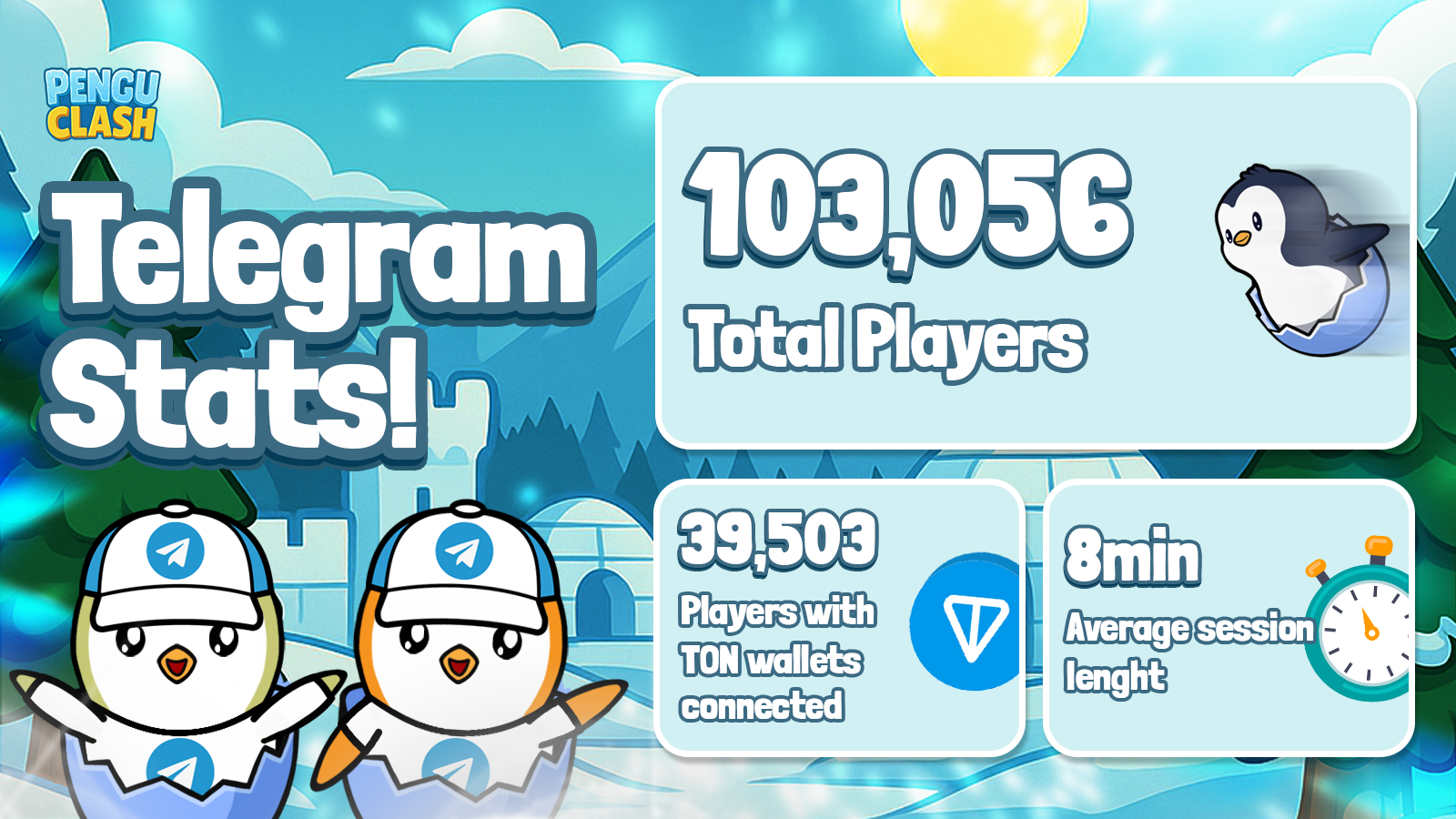
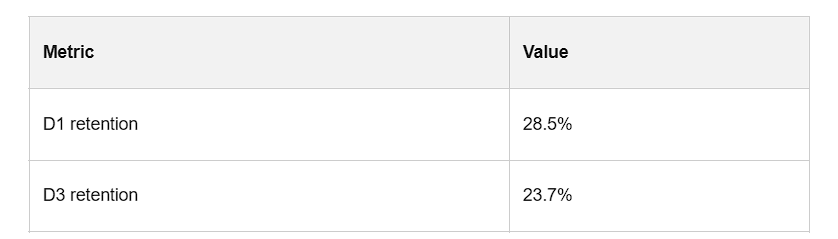
PenguClash launched on Telegram in mid-2025. Two retention metrics define the early story.
The D1-to-D3 gap is the number worth paying attention to. A drop of less than 5 percentage points between day one and day three means players who came back once kept coming back. That kind of curve does not happen by accident — it reflects a core loop with genuine pull.
Average session length was 8 minutes, which is healthy for a Telegram-native title. Players were running multiple matches per session, not dropping after one.
Abstract
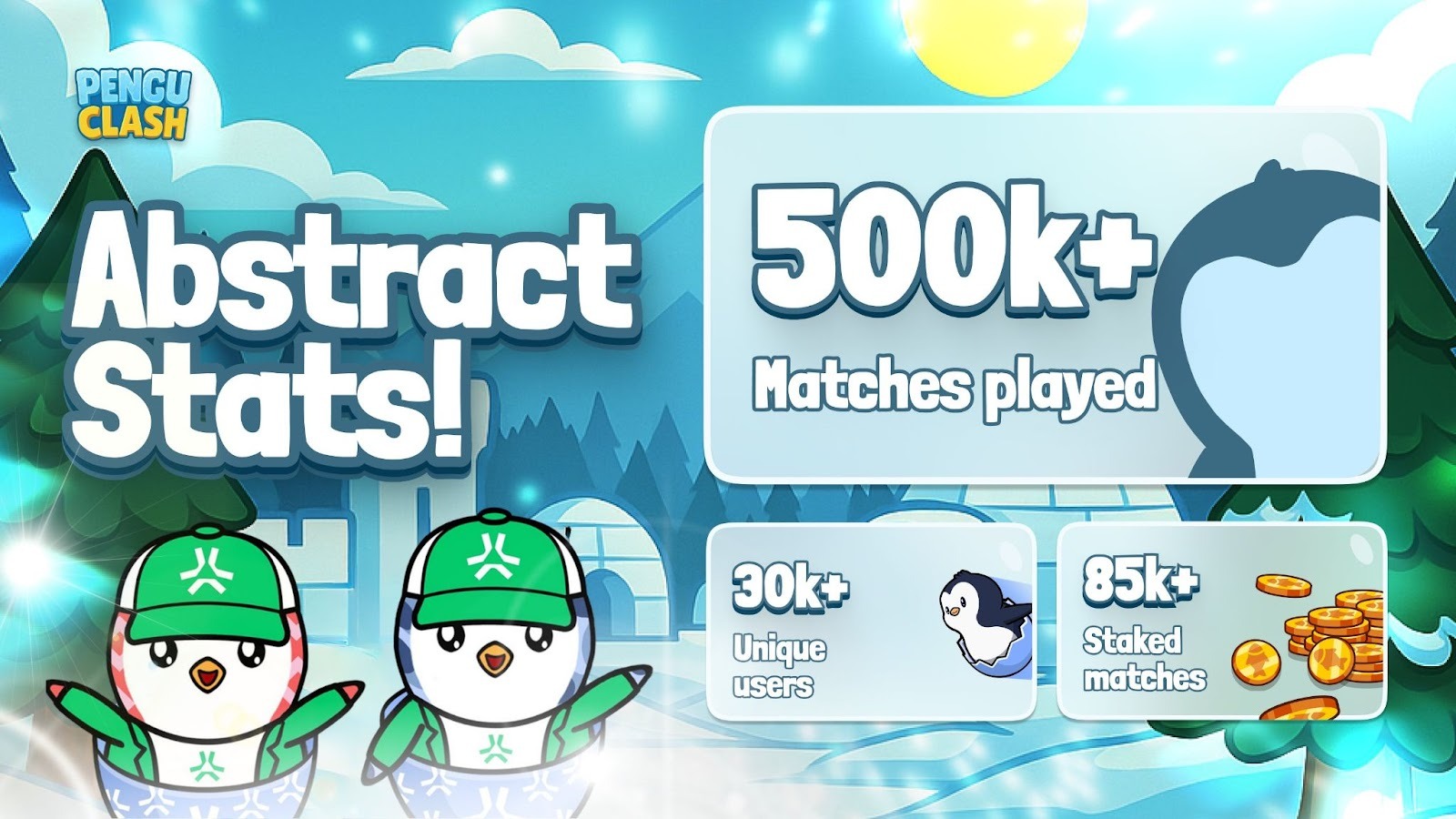
The Abstract chain launch outpaced Telegram's first month across every metric.
The staked matches number is the one that matters most. 85k+ staked matches signals a player base willing to put money on the line, which is the core behavior the wagering product is built around. That level of wagering engagement, this early, validated the Play2Win model on Abstract.
Running both platforms simultaneously — without rebuilding the game — was possible only because the Elympics SDK abstracts multi-chain complexity into a single codebase. Each new chain is a new player base, not a new development project.
Monetization: Two Tracks, Both Infrastructure-Dependent
PenguClash runs two revenue streams. Both depend on the Elympics backend in ways that would be difficult or expensive to replicate independently.
Players stake tokens on matches and tournaments. Winners take the pot. Elympics smart contracts handle distribution instantly and on-chain.
Because all match logic runs server-side, every wager is provably fair. There is no trust required and no manual payout process. The market benchmark for wagering participation in competitive games is 14% of active players — reaching that is the near-term target.
A meaningful early signal: on Abstract, 85k+ staked matches in the first month showed the model working at real scale.
Track 2: Cosmetics as On-Chain Assets
Cosmetic items in PenguClash are not locked to a game account. They are on-chain assets that live in the player's wallet — tradable and transferable outside the game entirely. This changes how players relate to them.
When a cosmetic item can be sold or traded, it becomes a digital collectible with secondary market value, not just a skin. That creates demand beyond the moment of purchase and sustains long-term interest in the cosmetics catalog.
Post-Launch: Iterating Toward Retention
The 3-month build was a starting point, not a finished product. After launch, the team's focus shifted to a question that every live game has to answer: why would someone come back tomorrow?
The answer we found came from free-to-play, not from crypto. The mobile gaming industry has spent over a decade refining what makes players return: progression systems, leaderboard resets, daily streaks, seasonal content cycles with fresh visuals and quests, and time-limited tournaments that create urgency without exclusion. These mechanics work because they give players reasons to play that are independent of any single session. We took that playbook and imported it directly into a Web3 context.
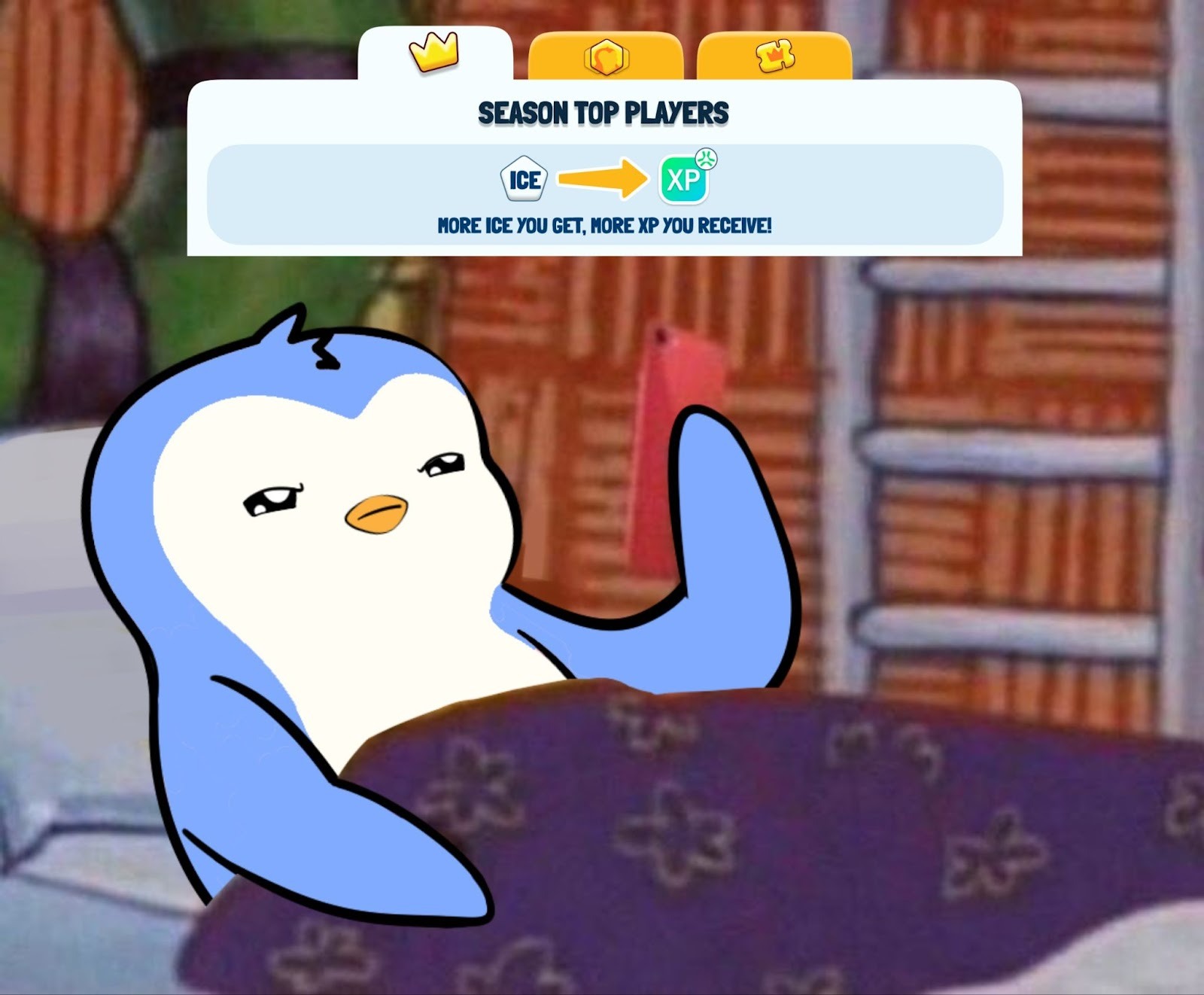
Ice points, earned by winning matches and completing quests, anchor the progression layer. All-Time and weekly leaderboards feed into prize raffles. The team shipped 30+ weekly seasons, a streak-based daily mode, and capped weekend tournaments, each iteration informed by what the previous week showed in the data. Sessions surged 20-30% on reset days. None of this was live at launch. It was built continuously, feature by feature, informed by player behavior.
Critically, token incentives were not doing the heavy lifting. Players returned because the competition itself was worth coming back for: the skill-based 1v1 format, the satisfaction of improving, the pull of a leaderboard with your name on it. Wagering adds stakes to that competition; it does not replace the underlying drive to win. This is what separates a game with durable retention from one that peaks when token prices are high and empties out when they fall. The competitive loop has to be genuinely engaging on its own. Play2Win works when it rewards competitiveness that already exists, not when it tries to manufacture engagement through financial incentives alone.
What Developers Can Take From This
Integrate infrastructure, don't build it. The ceiling for a 2-person team building competitive multiplayer from scratch is low. The Elympics SDK moved that ceiling dramatically. The question worth asking early is: what do you actually need to build, and what already exists?
Distribution is a product decision, not a marketing one. Pudgy Penguins drove 3.5M pre-registrations before launch. That community shaped the game's context — crypto-native, competitive, engaged. Choosing your distribution channel is choosing your player base, and that decision has downstream effects on every monetization and retention assumption you make.
Competitiveness is the product. Earnings are the reward. Players come to PenguClash because they want to win — the skill-based 1v1 format is the core hook. A game that leads with "earn tokens" without a genuinely competitive loop will lose players as soon as the reward loses value.
The wagering funnel needs trust to function. Server-side gameplay and smart contract payouts are not just technical features — they are the reason players will stake real money. Provably fair infrastructure is the precondition for Play2Win to work at scale. Building that trust into the architecture from day one is harder to retrofit than to design in.
On-chain ownership changes player psychology. When a cosmetic item is tradable, players treat it as an asset rather than an expense. Secondary market activity sustains catalog value over time in ways locked inventory cannot.
Resets are a retention mechanism, not just a content cycle. Weekly seasons, daily streak resets, and capped tournament brackets all use the psychology of urgency and loss-aversion to drive consistent daily activity. The 20–30% session spikes on reset days were not incidental — they were the designed outcome.
Scarcity should be structural, not artificial. A 32-player cap on a weekend tournament is not arbitrary — it makes every seat meaningful. Scarcity that players can see and feel (a leaderboard, a hard cap, a limited cosmetic) creates engagement that permanent availability cannot replicate.


.png)